



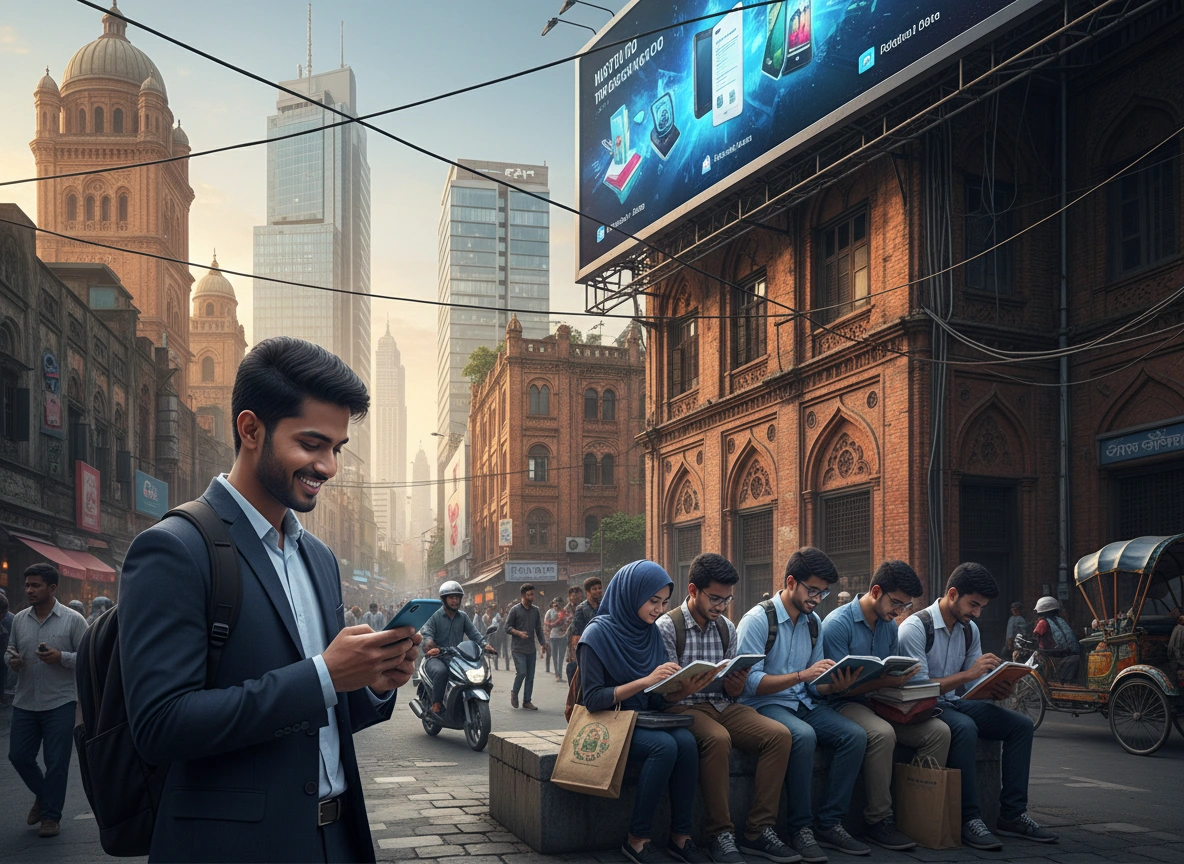
Bangladesh has undergone a remarkable transformation over the last two decades. Once defined primarily by its agricultural heritage and struggles with natural disasters, the nation is now crafting a new identity as a rapidly digitizing economy. This shift isn’t just happening in government policy papers or high-tech parks in Dhaka; it is visible in the dusty lanes of rural villages, bustling city intersections, and the hands of millions of citizens. From how people shop for groceries to how students attend classes, technology has fundamentally altered the rhythm of daily life in Bangladesh.
This deep dive explores the multifaceted impact of technology across key sectors, examining both the triumphs of “Digital Bangladesh” and the challenges that remain as the country navigates this seismic shift.
The Communication Revolution: Connecting the Unconnected
The most visible change in Bangladesh is undoubtedly in communication. The mobile phone has become ubiquitous. According to the Bangladesh Telecommunication Regulatory Commission (BTRC), the total number of mobile phone subscribers reached over 190 million by late 2023, a staggering figure given the country’s population size.
Connectivity Beyond Voice
It wasn’t long ago that making a long-distance call required a trip to a phone booth and significant patience. Today, affordable smartphones and widely available 4G data have democratized information. Social media platforms like Facebook and WhatsApp have become the primary town squares. For the millions of Bangladeshi expatriates working in the Middle East, Southeast Asia, and beyond, video calling has replaced the agonizing wait for letters or expensive voice calls. Families in remote villages can now see and speak to their loved ones in real-time, bridging emotional distances that once seemed insurmountable.
However, this connectivity comes with a cost. The rapid spread of social media has outpaced digital literacy. Misinformation and rumors spread via Facebook have occasionally led to social unrest and communal tension. The challenge for society has shifted from getting access to information to verifying the truth of that information.
Mobile Financial Services: A Banking Miracle
If mobile phones were the vehicle for change, Mobile Financial Services (MFS) provided the fuel. Platforms like bKash, Nagad, and Rocket have revolutionized commerce in a way that traditional banking never could.
Financial Inclusion
Before MFS, sending money from a garment factory worker in Dhaka to their parents in a rural district was risky and slow, often relying on informal couriers. Today, it takes seconds. This has brought millions of unbanked citizens into the formal economy. Daily life now involves scanning QR codes to pay for rickshaw rides, utility bills, groceries, and even school fees.
This shift has empowered small business owners and women particularly. A rural artisan can now sell her products directly to customers in the city and receive payment instantly, bypassing predatory middlemen. The friction of cash handling is slowly disappearing, making daily transactions smoother and safer.
Education: The Classroom Goes Digital
The COVID-19 pandemic acted as a harsh catalyst for technological adoption in education. While the transition was chaotic, it forced schools, universities, and students to embrace digital tools.
Access to Global Knowledge
Today, students in Bangladesh are no longer limited by the physical books available in their local libraries. Platforms like 10 Minute School have democratized high-quality education, offering free tutorials and courses to millions. A student in a remote part of Khulna can access the same test preparation materials as a student in an elite school in Gulshan.
The Digital Divide
However, education technology highlights a stark inequality. While urban students with high-speed internet and laptops transitioned relatively well during lockdowns, rural students often struggled with poor connectivity and lack of devices. This “digital divide” threatens to widen the gap between the rich and poor if not addressed. While technology offers the potential for equal access, infrastructure limitations mean that daily reality varies drastically depending on one’s zip code.
Healthcare: Telemedicine and Digital Records
The healthcare sector has traditionally been a pain point for the average Bangladeshi, characterized by long queues and centralized facilities in major cities. Technology is beginning to alleviate some of these pressures.
Breaking Geographic Barriers
Telemedicine services have emerged as a lifeline. Apps and hotlines allow patients to consult doctors via video call, receive digital prescriptions, and even order medicine for home delivery. For a rural patient, this means avoiding a costly and physically draining trip to Dhaka for a routine consultation. Startups are also working on digitizing patient records, which improves the continuity of care. Instead of carrying tattered paper files, patients can increasingly rely on digital history that any doctor can access.
Yet, trust remains a hurdle. Many patients still feel that a doctor’s visit isn’t “real” without a physical examination. Furthermore, while urban centers enjoy diagnostic automation, rural clinics often lack basic reliable electricity, let alone advanced medical tech.
Transportation and Urban Mobility
Dhaka is infamous for its traffic congestion. While technology hasn’t solved the traffic jams, it has made navigating them more manageable. Ride-sharing apps like Uber and Pathao have brought structure to chaotic commutes.
Efficiency and Safety
Commuters no longer have to haggle with CNG drivers on the street. They can book a ride, track their journey, and pay digitally. This has introduced a layer of accountability and safety, particularly for female commuters, who can share their ride status with family members.
On a macro level, the government is implementing intelligent traffic management systems and digital ticketing for the new Metro Rail service. The Metro Rail itself is a technological marvel for the country, introducing automated ticket vending and smart passes—concepts that were foreign to daily commuters just a few years ago.
The Role of Government and Private Sector
The transformation of daily life wasn’t accidental. The government’s “Digital Bangladesh” vision 2021 laid the groundwork. Initiatives included setting up Union Digital Centers (UDCs) in local council offices, bringing government services like birth registration and land records to the village level. This reduced the bureaucratic hassle that once consumed days of an average citizen’s life.
The private sector has been equally aggressive. Telecom operators invested billions in infrastructure, while a vibrant startup ecosystem has tackled local problems with local software solutions. From grocery delivery (Chaldal) to home services (Sheba.xyz), startups are removing daily frictions for the urban middle class.
Challenges and The Dark Side of Tech
Despite the optimism, the impact of technology isn’t purely positive.
- Cybersecurity Threats: As life moves online, so do criminals. Scams involving MFS accounts, identity theft, and hacking have become common annoyances and serious threats.
- Screen Addiction: Similar to global trends, Bangladeshi youth are grappling with screen addiction. Physical play and face-to-face social interactions are declining in favor of gaming and social scrolling.
- Job Displacement: Automation in the garment sector—the backbone of the economy—poses a future threat to millions of low-skilled jobs. While technology creates new tech jobs, there is a mismatch between the skills of the current workforce and the needs of a digital economy.
Future Outlook: Smart Bangladesh
Looking ahead, the government has announced its next vision: “Smart Bangladesh 2041.” The goal is to move beyond basic connectivity to a society integrated with AI, robotics, and sustainable technology.
We can expect daily life to integrate more Internet of Things (IoT) devices. Smart electricity meters are already being installed to prevent billing disputes. Agricultural technology will likely see the biggest boom next, with farmers using apps to determine soil health and market prices, ensuring food security for the growing population.
Conclusion
The impact of technology on daily life in Bangladesh is profound and irreversible. It has empowered the marginalized through financial inclusion, connected families across oceans, and offered students a window to the world. A farmer in Rangpur checking crop prices on a smartphone and a freelancer in Dhaka coding for a US client represent the same spectrum of progress.
However, the journey is far from complete. The focus must now shift from access to quality and equity. Ensuring that the internet is safe, that the rural poor are not left behind in the data revolution, and that digital literacy becomes a standard part of education are the critical tasks ahead. Bangladesh has proven it can adopt technology rapidly; the next challenge is to ensure that this technology serves to improve the quality of life for every single citizen, not just the privileged few.
Please visit website for more info.
