



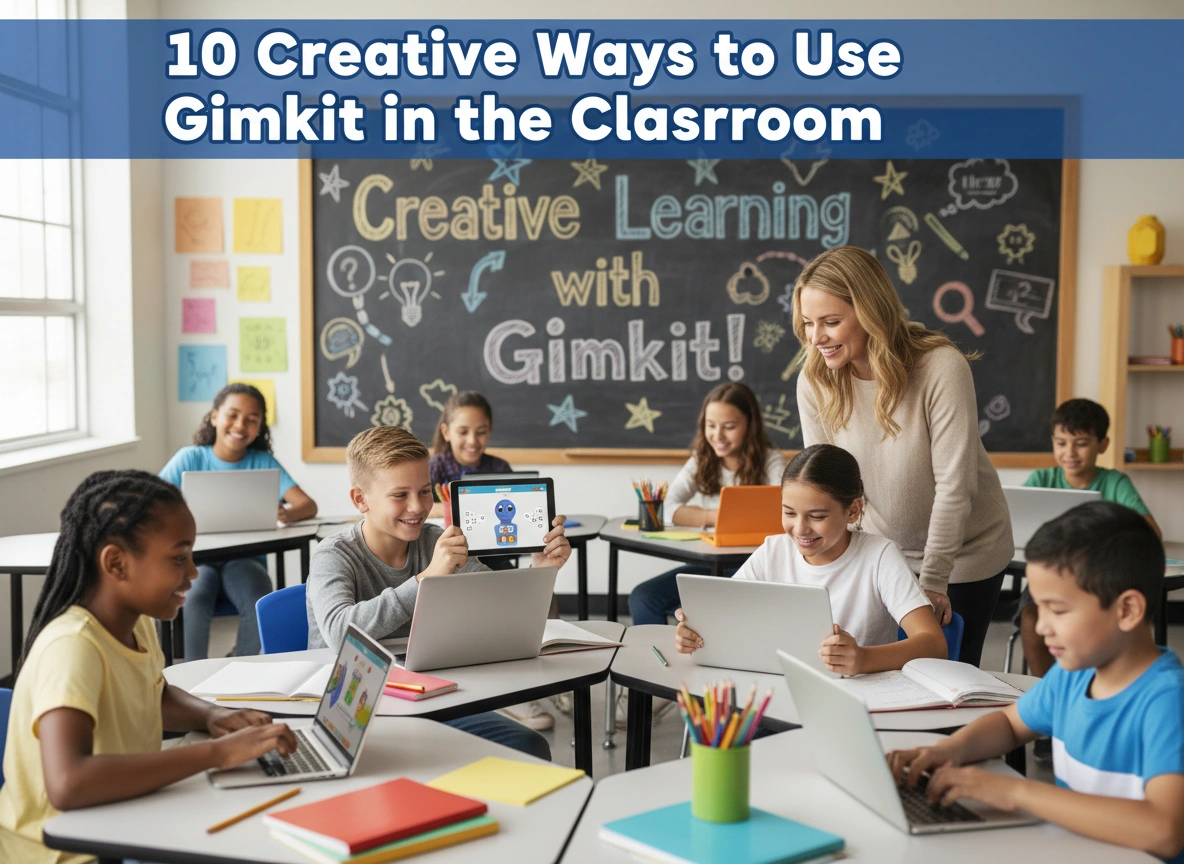
Engagement is often the hardest hurdle in education. You have the lesson plan, the materials, and the knowledge, but capturing the sustained attention of twenty-five students is a different challenge entirely. This is where gamification tools usually enter the conversation, but few platforms have evolved the concept quite like Gimkit.
Created by a high school student who felt classroom games were becoming stale, Gimkit is a live quiz learning game that offers a unique twist: strategy. Unlike traditional quiz tools where speed is the only variable, Gimkit introduces an in-game economy. Students earn virtual currency for correct answers, which they can use to buy power-ups or insurance against wrong answers. This strategic layer keeps students engaged long after the initial novelty wears off because the gameplay is dynamic; a student in last place can surge to the front with the right combination of upgrades.
Beyond the fun factor, Gimkit is a robust pedagogical tool. It provides detailed data reports, supports homework assignments, and offers versatile modes that fit various learning objectives. If you are looking to move beyond simple trivia review, here are ten creative ways to integrate Gimkit into your teaching strategy to boost engagement and retention.
1. The “KitCollab” Review Session
One of the most powerful features in Gimkit is KitCollab. Instead of the teacher doing all the heavy lifting, this mode crowdsources the question bank from the students themselves. This shifts the cognitive load from passive consumption to active creation.
How it works:
You start a KitCollab session, and students submit questions from their own devices. You, as the moderator, approve or reject them in real-time. Once the bank is built, the class plays the game using the questions they just wrote.
Implementation Example:
At the end of a history unit on the Cold War, ask students to write one “easy” question about a date or name, and one “hard” question involving cause-and-effect. By writing the questions, students must evaluate what information is most critical, effectively reviewing the material before the game even begins.
2. Using “Trust No One” for Critical Analysis
Among Us—the popular social deduction game—took the world by storm, and Gimkit has its own educational version called “Trust No One.” This mode requires students to identify impostors while answering questions to keep the ship running.
How it works:
Students must answer academic questions to earn power and conduct investigations. While they review content, they must also observe peer behavior and deduce who is sabotaging the mission.
Implementation Example:
Use this mode for a literature class studying character motivation or unreliable narrators. The gameplay mechanics mirror the themes of suspicion and deduction found in books like The Crucible or Lord of the Flies. It serves as a brilliant thematic bridge between the content of the novel and the classroom activity.
3. Asynchronous “assignments” for Mastery Learning
Gimkit isn’t restricted to live, synchronous play. You can assign “Kits” as homework with a specific deadline. This is excellent for self-paced learning, as students can play through the questions multiple times until they reach a target cash goal.
How it works:
Set a cash goal rather than a time limit. This forces students to answer enough questions correctly to reach the target. If they struggle, they simply answer more questions, providing natural repetition without the anxiety of a “one-and-done” quiz.
Implementation Example:
For a math class learning slope-intercept form, assign a Gimkit for homework with a high cash goal. Students who grasp the concept quickly will finish fast by using streaks and multipliers. Students who need more practice will naturally answer more questions to reach the goal, ensuring they get the “reps” they need without feeling penalized.
4. The “Floor is Lava” for Cooperative Survival
Competition is great, but cooperation is an essential 21st-century skill. The “Floor is Lava” mode forces the entire class to work together to keep their construction above the rising lava.
How it works:
Students earn money individually by answering questions, but they must pool their resources to build a structure. If they stop answering or get too many wrong, the lava rises and ends the game for everyone.
Implementation Example:
Use this for difficult subject matter where morale might be low, such as complex chemistry equations or physics problems. The “us vs. the game” mentality builds classroom community. When the class wins, it feels like a collective victory rather than a single student showing off.
5. Pre-Assessment and Prior Knowledge Checks
Teachers often use games for post-unit review, but Gimkit is surprisingly effective as a diagnostic tool before a unit begins. Because the stakes are low (it’s just a game), students are less anxious about getting answers wrong, giving you a truer picture of their baseline knowledge.
How it works:
Create a Kit covering the upcoming unit’s vocabulary and core concepts. Play a quick 10-minute session.
Implementation Example:
Before starting a biology unit on cell division, run a Gimkit featuring terms like “mitosis,” “cytokinesis,” and “chromosomes.” After the game, pull up the class report. If 80% of the class already knows “mitosis,” you can skip the basic definition and move straight to the phases. This data-driven approach saves time and prevents boredom.
6. Financial Literacy Simulations with Classic Mode
The core mechanic of Gimkit involves money management: spending money to make money. This makes it an accidental but effective tool for teaching basic economic principles like investment, risk vs. reward, and compound interest.
How it works:
In Classic Mode, students must decide whether to hoard cash or invest in upgrades like “money per question” or “streak bonuses.”
Implementation Example:
In an economics or general math class, pause the game every 3 minutes. Ask students to justify their strategy. “Why did you buy the multiplier instead of the insurance?” Use the game as a microcosm to discuss real-world financial concepts like ROI (Return on Investment) and the cost of being risk-averse versus risk-tolerant.
7. Differentiated Instruction with “Sent Back”
One of Gimkit’s options allows you to toggle “Answer Check.” If you disable the ability for students to see the correct answer immediately after a mistake, or if you use modes where getting a question wrong has a high penalty, you change the cognitive requirement.
However, a specific strategy is creating tiered Kits.
How it works:
Create three versions of the same Kit: Beginner, Intermediate, and Advanced. Group students based on recent performance and have them play the version that matches their Zone of Proximal Development.
Implementation Example:
In a Spanish language class, the Beginner group might match words to pictures. The Intermediate group translates sentences. The Advanced group fills in the blanks of complex paragraphs. Everyone is playing Gimkit, but the content is tailored to challenge them appropriately without causing frustration.
8. The “Fishtopia” Resource Management Lesson
Fishtopia is arguably the most complex mode in Gimkit. It moves beyond simple menus and drops students into a virtual world where they catch fish, answer questions to buy bait, and sell their catch.
How it works:
This mode requires balancing time, inventory space, and resource collection. It is much slower-paced than other modes.
Implementation Example:
This is perfect for a “Friday Fun” day that still retains academic rigor. However, you can also use it to teach efficiency and logistics. Have students track their “cash per minute” efficiency. Discuss how upgrading the bucket size (capacity) improved their workflow compared to upgrading their fishing rod (speed). It turns a quiz game into a systems thinking exercise.
9. Exit Tickets with Instant Data
Traditional paper exit tickets are great, but grading them takes time. Gimkit’s reporting feature offers an instant snapshot of understanding the moment the class ends.
How it works:
Create a short, 5-10 question Kit focused exclusively on that day’s lesson. Play for 5 minutes at the end of class.
Implementation Example:
After a lesson on poetic devices, run a quick session where students identify metaphors, similes, and alliteration in snippets of text. Immediately after the game, look at the “Question Breakdown.” If the question about alliteration has a 40% accuracy rate, you know exactly what to reteach as the bell ringer the next morning.
10. Student-Led “Teacher for a Day”
Allowing students to host the game can be a powerful motivator. This rewards good behavior and leadership while giving you a chance to observe the class dynamic from the sidelines.
How it works:
A student who has demonstrated mastery of the topic or excellent citizenship gets to curate the playlist (pick the game mode) and control the “Music” and game settings.
Implementation Example:
Rotate this role weekly. The student host is responsible for explaining the rules of the selected mode to the class (building public speaking skills) and encouraging their peers during the game. It changes the dynamic from “teacher vs. student” to a peer-led activity, often resulting in higher buy-in from the class.
Conclusion: Leveling Up Your Classroom
Gimkit is more than just a flashy alternative to flashcards. Its genius lies in its flexibility. Whether you need a high-energy competitive atmosphere to wake up a sleepy first-period class or a collaborative challenge to build team unity, there is a mode that fits the bill.
By moving beyond the standard “quiz” format and utilizing features like KitCollab, homework assignments, and strategic economic simulations, you transform assessment into an activity students actually look forward to. The data you gather informs your instruction, and the engagement you generate builds a positive, energetic classroom culture. Start small, try one of these creative methods this week, and watch your students’ enthusiasm for learning level up.
Please click here for more info.
